
What’s on my plant?
Drawn ID guides for the 6 most common houseplant pests: fungus gnats, spider mites, mealybugs, scale, aphids and thrips — how to spot each and what to do first.
Top photo: Small white sap-sucking insects (whitefly or mealybug) on a leaf. Photo: Forest and Kim Starr, CC BY 3.0, via Wikimedia Commons.
Look at where the bug is and what the leaf looks like: flies around the soil are fungus gnats, pale dots and webbing under leaves are spider mites, white cotton in the leaf joints is mealybugs, brown bumps on stems are scale, green clusters on new growth are aphids, and silvery streaks with black specks are thrips.
Most of these can be handled at home with a shower, a cotton swab and insecticidal soap — if you catch them early and repeat the treatment.
Quick chart
| What you see | Where | Pest | First step |
|---|---|---|---|
| Small dark flies, weak fliers | Around the soil, on windows | Fungus gnats | Let the top 2 inches of soil dry |
| Pale dots, fine webbing | Under leaves | Spider mites | Rinse the plant in the shower |
| White cotton clumps | Leaf joints, under leaves, roots | Mealybugs | Dab with rubbing alcohol on a swab |
| Brown or tan bumps that don’t move | Stems and leaf veins | Scale | Scrape off, then treat |
| Green/black pear-shaped bugs in groups | Tips and new leaves | Aphids | Spray off with water |
| Silvery streaks, black specks | Leaf surfaces, flowers | Thrips | Rinse, then soap weekly |
| Sticky, shiny leaves | Leaves and the floor below | Honeydew from aphids, scale or mealybugs | Find the bug above it |
Fungus gnats
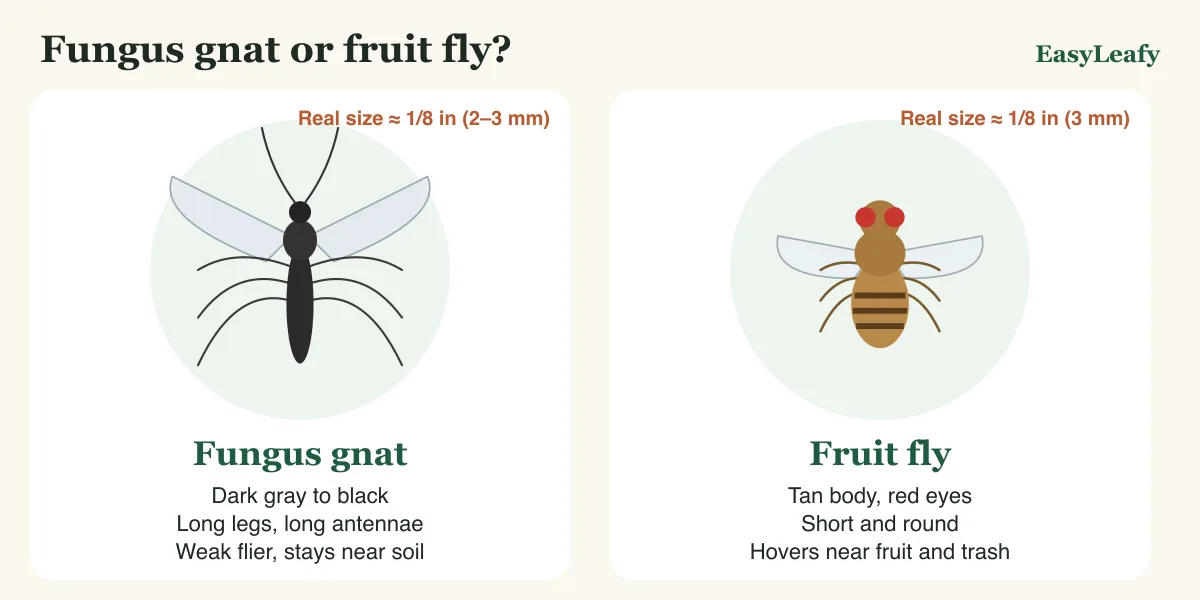
The most common indoor pest and the least harmful: adults are just annoying, larvae live in wet topsoil. They’re a sign the soil stays too wet. Full plan: how to get rid of fungus gnats.
Spider mites
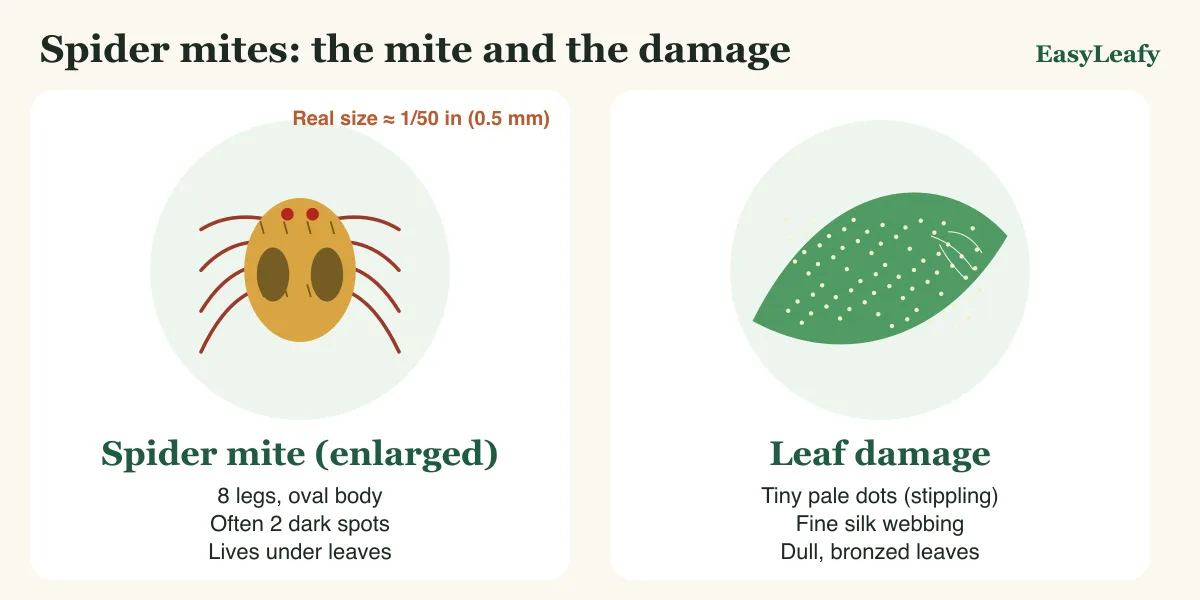
Barely visible, but the damage isn’t: a leaf that looks sprinkled with salt, then dull and bronze. They love warm, dry rooms, so they peak when the heating is on. Tap a leaf over white paper; moving specks confirm it. 3-week treatment plan →
Mealybugs and scale
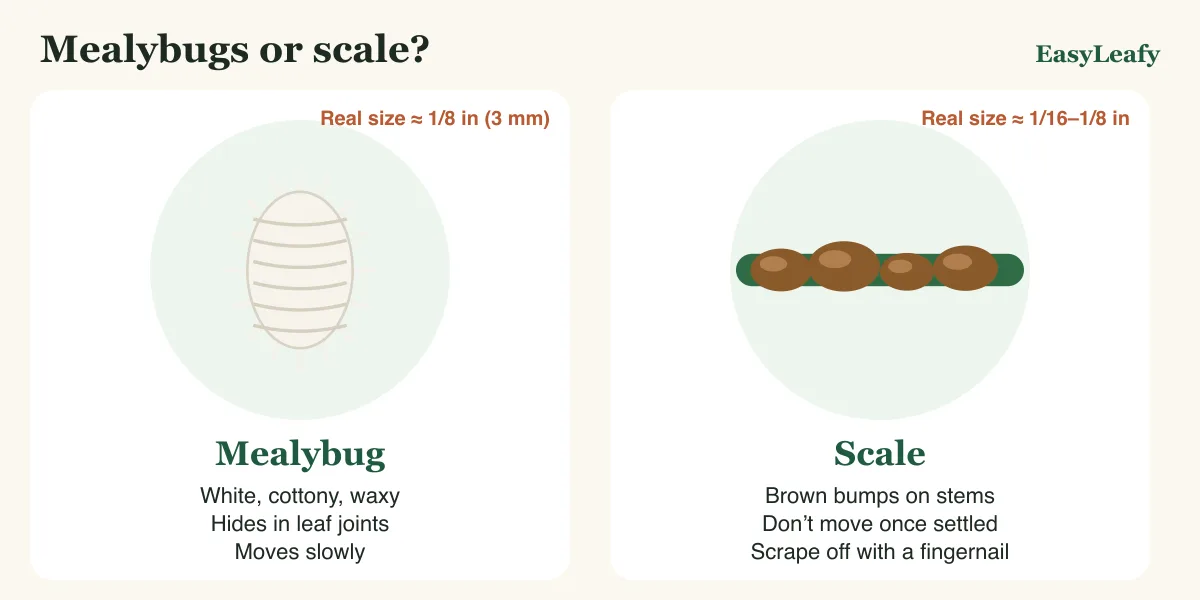
Both suck sap and leave sticky honeydew. Mealybugs look like bits of cotton and hide in leaf joints and even on roots. Scale looks like little brown shells glued to stems — many people mistake them for part of the plant until they scrape one off.
What works at home:
- Isolate the plant.
- Mealybugs: touch each one with a cotton swab dipped in 70% rubbing alcohol. Scale: scrape them off with a fingernail or an old toothbrush.
- Spray the whole plant with insecticidal soap or horticultural oil labeled for houseplants, covering leaf undersides and stems.
- Repeat every 7 days for at least 4 weeks — young “crawlers” keep hatching from hidden eggs.
- Heavily infested and not a favorite? Sometimes discarding the plant is the kindest option for the rest of your collection.
Aphids and thrips
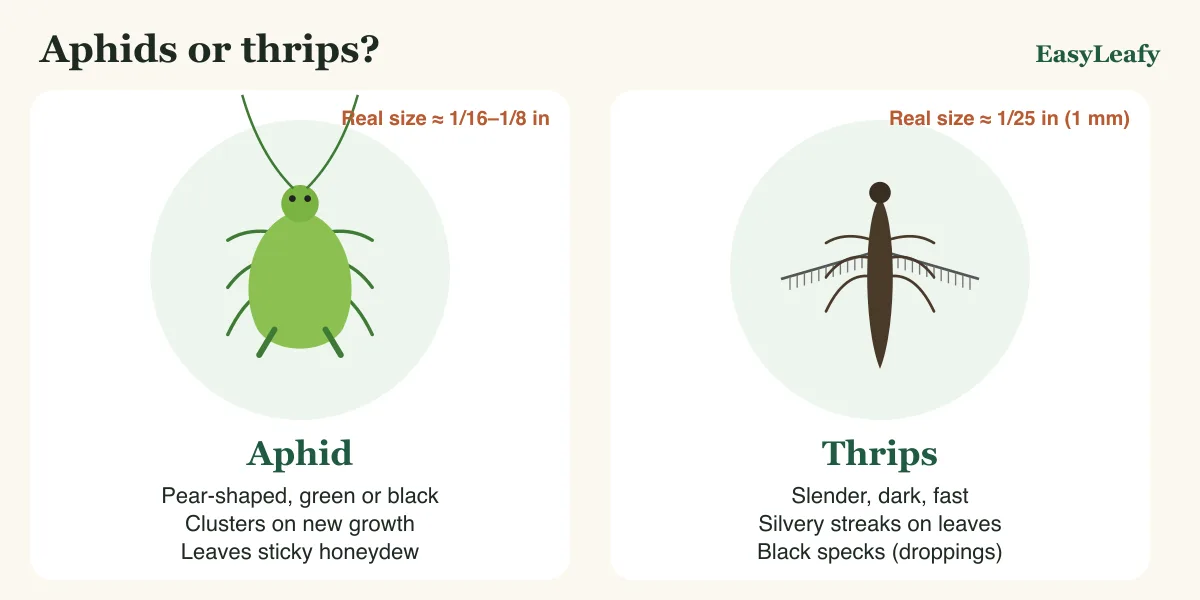
Aphids cluster on soft new growth and flower buds. They’re easy: a strong spray of water knocks most off, and insecticidal soap finishes them. They often arrive on plants that spent summer outside.
Thrips are slender and fast, and you’ll more often see their damage — silvery, scratched-looking streaks with tiny black specks — than the insects. Treat like mites: rinse, then insecticidal soap weekly for 3–4 weeks, and remove damaged flowers where they hide.
Sticky leaves?
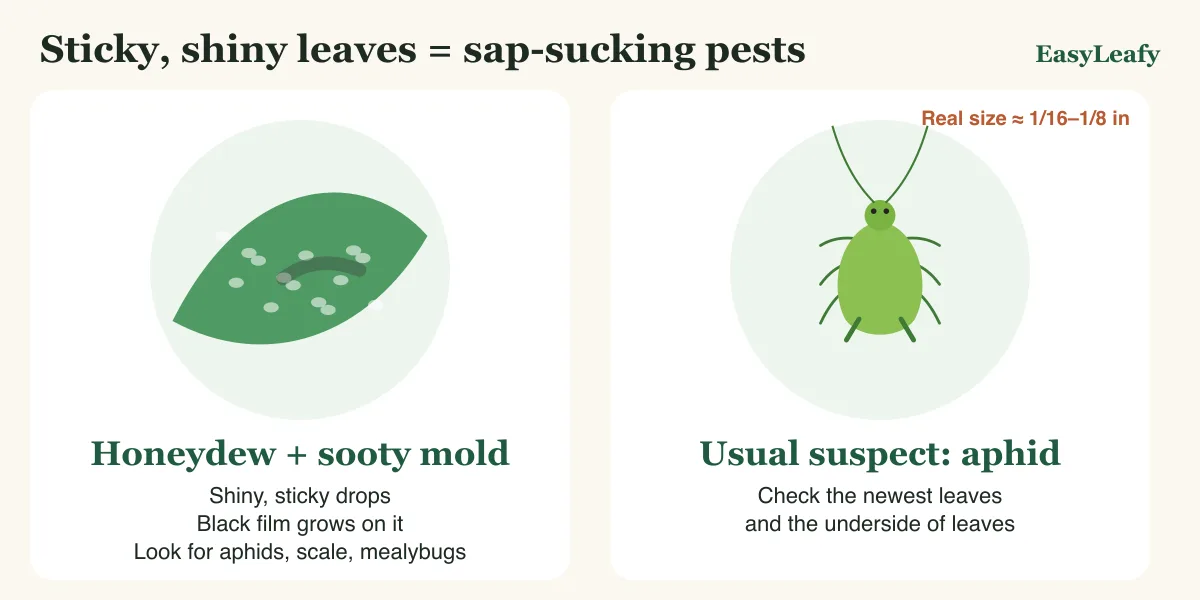
Shiny, sticky drops on leaves or on the furniture below mean sap-suckers are feeding above. Over time a black film (sooty mold) grows on the honeydew; it wipes off with a damp cloth once the pests are gone.
Prevention that actually works
- Quarantine new plants for 2 weeks before they join the others.
- Check leaf undersides when you water. Ten bugs are easy; ten thousand aren’t.
- Shower your plants every month or two to rinse off dust and early pests.
- Inspect plants before bringing them in for winter. The checklist →
- Don’t overwater. Soggy soil invites gnats and weakens roots. Watering chart →
Quick answers
What are the tiny white bugs on my houseplant?
White, cottony clumps in leaf joints are mealybugs. Tiny white flying insects that rise when you touch the plant are usually whiteflies. Tiny white specks crawling in the soil are often harmless springtails.
Can houseplant bugs spread to other plants?
Yes. Mites, mealybugs, scale, aphids and thrips all move between plants that touch or sit close together, and ride on hands and clothes. Isolate an infested plant while you treat it.
Sources
- UC IPM (University of California) — Mealybugs
- UC IPM (University of California) — Scales
- UC IPM (University of California) — Aphids
- UC IPM (University of California) — Spider Mites
Checked November 9, 2026. Spotted an error? Tell us — see our editorial policy.

Pin it to your plant board so you can find it when you need it.
Save to PinterestKeep reading
More Plant Problems →
Why pothos leaves turn yellow
Yellow pothos leaves are a message. Learn to read the pattern — soft, crispy, old or new leaves — and fix overwatering, light, roots and more.
Plant Problems
Overwatered or underwatered?
Both make leaves droop and turn yellow. Check the soil, the leaf texture and the roots to tell overwatering from underwatering — and fix each one.
Plant Problems
Brown tips on leaves
Crispy brown tips are usually dry soil, dry air, or salts and fluoride in tap water. How to tell which one by the pattern, and which plants are most sensitive.
Plant Problems
The hand-shadow light test
The free 30-second trick plant pros use: read your hand's shadow to know if a spot has bright, medium or low light — and which plants will thrive there.
Plant Care Basics
10 plants for dark apartments
No sunny windows? These 10 plants grow in low light — plus how to tell how much light you really have and the one mistake people make in dark rooms.
Indoor Plants
Christmas cactus not blooming?
Christmas cactus sets buds when nights are long or cool. The 6-week plan to get blooms, why buds drop, and how to tell a Thanksgiving cactus from a Christmas cactus.
Indoor Plants